Saturday, February 15, 2020

On the way to Buenos Aires

We are travelling up the coast of Argentina to the mouth of the Rio de la Platte, originally meaning the river to silver, as it led to silver mines.


When word of Incan gold reached Europe in 1512, Buenos Aires was just a stop over along the river. In 1536, Spanish colonizer Pedro de Mendoza originally named the city Nuestra Senora Santa Maria del Buen Aire, "Our Lady St. Mary of the Good Air". The settlers were forced away by attacks of indigenous people. The Spanish were more successful in establishing a quiet isolated town in the 1580's.


The cattle boom of the 1880's brought an influx of European settlers. Soon beautiful buildings with architecture reminiscent of Rome, Paris, and London lined impressive wide avenues.

Today the population of the greater metropolitain area is more than 15 million .


At 5:30 p.m. we docked at the newest of the three ports that have been established over the years.  It is very entertaining watching the shuttle buses that take everyone to the Terminal and seeing all the containers ready to load onto ships.


Thursday, February 13, 2020

Sea lions and Dinosaurs

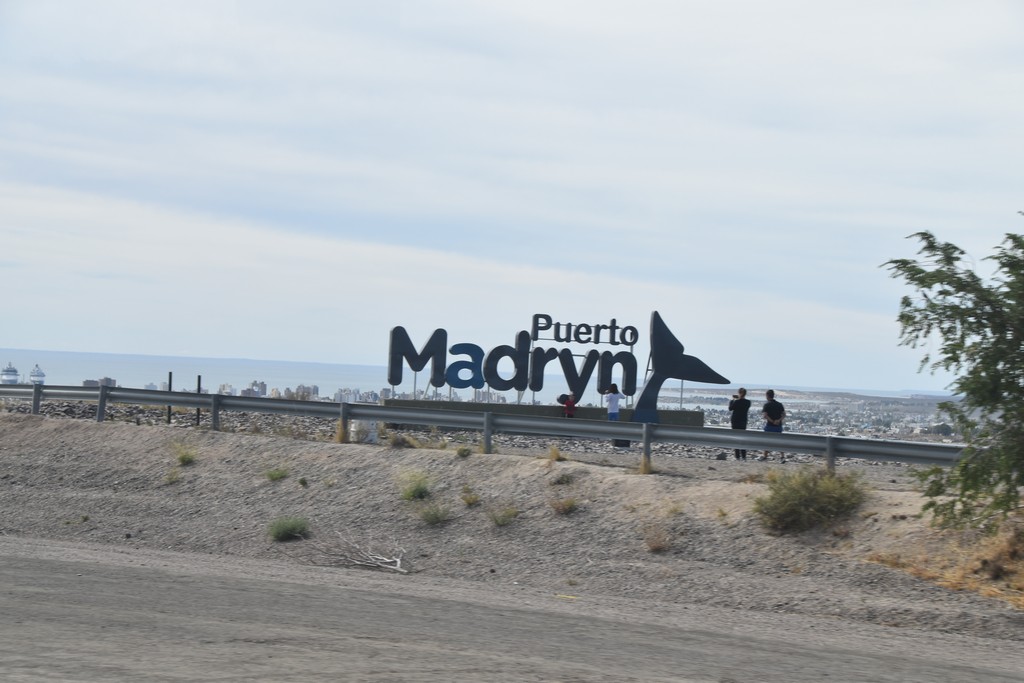
The coastal city of Puerto Madryn on the shores of a huge bay, Golfo Nuevo, was originally settled by 150 colonists from Wales in 1865.  They came here to farm after a promise of 100 square miles along the Chubut River.  It is now Argentina's second largest fishing port and home of the Aluar aluminum factory and other businesses.  It is also a major whale watching centre as over half of the world's southern right whale population inhabits these waters. It is also home to major colonies of sea lions, Magellanic penguins and other sea birds.


 The Welsh settlement is in the town of Trelew. Also located there is the Museum of Paleontology, a centre for scientific research. It has permanent and traveling exhibitions of fossil remains of flora and fauna of Patagonia dating back 400 million years.

Today we enjoyed sunny skies and a temperature of 17 C (63 F). Jack got to wear shorts for the first time this trip!


Tuesday, February 11, 2020

Free Rock Hopper beer in Stanley

We left Cape Horn and sailed for 24 hours to Stanley, the capital located on the tip of the East Falkland Island.  Because of the threat of impending stormy weather, all tours were cancelled but the shuttles were running.  Jack got to shore and realized he had not brought along his wallet.   A friendly fellow-passenger, seeing his sad face, invited him to a local watering hole for beer (actually 3 beers).
Thank you, Peanuts!

   Port Stanley was established in 1845 by the British as a deep water port specializing in repairs for boats travelling through Magellan Strait on their way to the California gold rush. Here one can see the world's most southern  Anglican cathedral.  The Whalebone Arch is made from the jaws of two blue whales. Along the shore, spelled out in rocks are the names of the patrol ships of the Royal Navy that have been stationed here to protect the sovereignty of the islands.


The economy of the islands depends on exportation of meat, wool, and fish and there are oil reserves.  Vegetables can be grown on the island but no fruit as there are no insects to pollinate the blossoms.

The Falklands War in 1982 was a 10 week undeclared war between Argentina and the United Kingdom. The United Kingdom government has consistently maintained that they continue to protect their interests in the islands because it is the will of the residents.  Lives were lost and clearing of land mines is ongoing by the British government.

War memorial 
Tribute to Prime Minister Margaret Thatcher


The Falklands teem with hundreds of species of flora and fauna.  Most notable are the penguin species - kings, rock hopper, gentoo, Magellan.  The rookeries are remote and can only be accessed by four wheel drive vehicles.  Some of the group of islands have no rats living on them.  Since rats eat eggs, the penguins number in the thousands.


Monday, February 10, 2020

The End of the World

Isla Hornos  (Horn Island) is a Chilean Island at the tip of South America, part of the Tierra del Fuego archipelago. The southernmost tip, Cape Horn, is 640 km (398 miles) from Antarctica. Although there are a few islands south, this is called "the end of the world". Jack bought the hat.


Our ship arrived at 8:00 a.m. on a cool, blustery day.  It is not always safe to circle the island but the captain determined that we could do it. The Chilean Navy maintains a station on the island consisting of a residence, chapel, utility building and lighthouse. To the right of the station shown in the picture is a metal sculpture, called "The Albatross", erected in memory of all the sailors who lost their lives rounding the Horn.

From a distance, the monument looks like two triangular sails.


We did not land, but if we had we could have seen this.


Seeing the rocks in the Drake Passage, it is easy to imagine why old time ships, without the technology we have today, had such a difficult time navigating Cape Horn.


Sunday, February 9, 2020

Ushuaia, Argentina

 As we sailed along the Beagle Channel, named for the ship that carried Charles Darwin, we saw five spectacular glaciers named for the countries of origin of those who discovered them.  
Italian Glacier


Along the way we were entertained by sea lions alongside the ship as we headed for the port of Ushuaia (pronounced oos-way-ya), our first stop in Argentina.  

The area was originally inhabited by the Yamana Indians until Captain Robert Fitzroy arrived in 1833 on a British missionary voyage. Rev. Thomas Bridges devoted himself in the late 19th century to creating a dictionary of the native language.  Sadly, the natives were wiped out by disease by the early 20th century.  

The town of Ushuaia is a former penal colony nestled in a U shaped cove adjacent to the Beagle Channel.  The prisoners constructed the town's railway, hospital and port. Now a metropolis of more tha 70,000 residents, it is the gateway to rugged wilderness adventures by boat, rail, 4X4 or on foot.  It is also one of the emnarkation points for cruises to the Antarctic. 


On our catamaran cruise of the Beagle Channel,  we saw many native birds - Imperial cormorants (which look like penguins), rock cormorants, kelp gulls, skuas, and kestrels.  A male sea lion with a mane oversees about ten lighter coloured females. 


Once again we were fortunate to have a beautiful sunny day - temperature 14 C (57 F). 

Saturday, February 8, 2020

Punta Arenas

.

Today we docked at Punta Arenas, our first (and last) stop in Chile. This is the world’s most southern city.  It was inhabited by Thuelche people for 14 500 years before 1520 when Ferdinand Magellan sailed through the strait that bears his name.  It was not settled until 1848 when Portugal established a penal colony here.  By the early 20th century, Europeans had made their fortunes in sheep ranching.
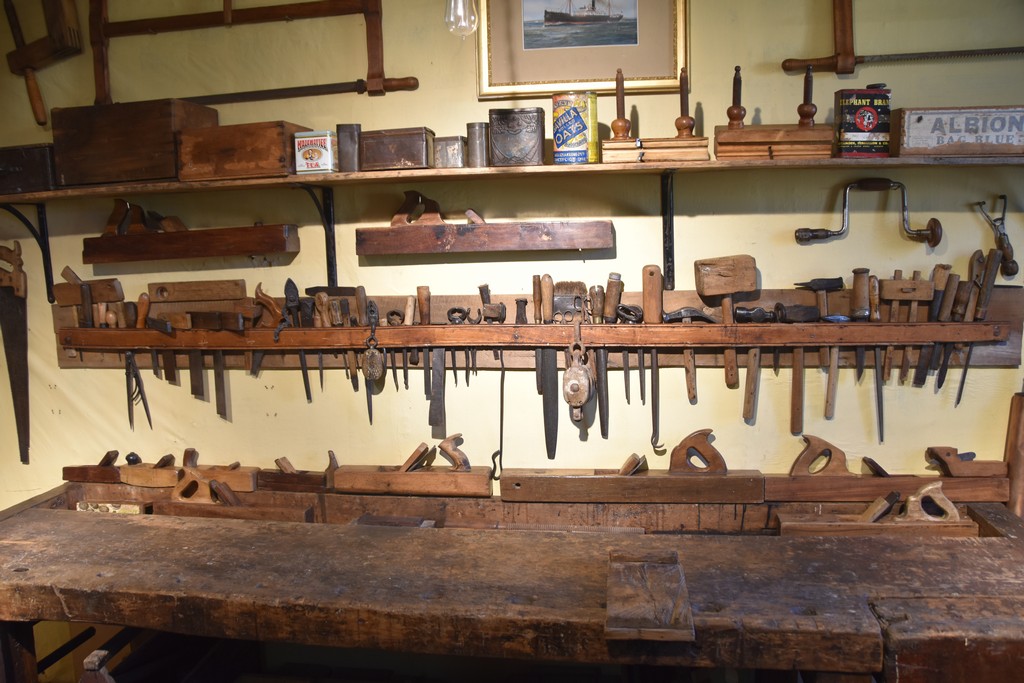
Our first stop was the Patagonia museum, similar to Upper Canada Village, where we saw old equipment, much of it steam driven, There were typical homes and shops.


Our next stop was "the sixth most beautiful cemetery in the world".  Eva Braun was a Russian woman who came to Chile and married a rich farmer who died a short time later.  She took over his business.  She brought tradesmen from Europe to design and build beautiful mansions.  Upon her death, she left a large plot of land for the City Cemetery where we saw elaborate tombs and mausoleums marking the final resting place for many of the region's founding families.

This a statue to the "unknown aboriginal", honouring the indigenous peoples, being explained by our excellent guide Diego. In the Maggiorino Borgatello Museum, displays included natural history, aboriginal culture, and Antarctica.

After a stop at a scenic lookout and the Market Square, we found local beer (Austral lager) at a corner restaurant and bar.  This was a perfect day - sunny, 15 C (55 F), no wind. According to Diego, this is unusually good weather for Patagonia.


Thursday, February 6, 2020

Departure

Yesterday, around noon, the captain announced that after "negotiations" with the port authority we had been given permission to leave.  The swells were high and the sea had white caps but we still cheered to be on our way.  Since we are now 42 hours behind schedule, the ship is going south along the coast of Chile at high speed.  We will miss our stop at Puerto Montt and one day of scenic cruising along the Amalia Glacier.  However, there are more glaciers in our future before we reach "the end of the world".


As we are headed towards Antarctica, it is getting colder.  
Today the high will be 13 C (55 F) but the days are long with sunset at 9:39 p.m.